
Ubiquiti CWDM Mux Demux 4, 1270/1290/1310/1330 nm
Brand:
Ubiquiti





UACC-CWDM-4
Delivery
Order Today...
Ships...
Delivery...
ℹ️ Large or fragile items (e.g. monitors) may require extra handling time. We'll keep you informed.
Payment options
Trusted Tech Choice
Buying Benefits
Verified
Competitive EU pricing
Delivered to Cyprus from EU stock
Local warranty support
Please sign in so that we can notify you about a reply
Ubiquiti CWDM Mux Demux 4 - Four-channel optical mux/demux
4 CWDM channels1270 / 1290 / 1310 / 1330 nmSMF-28e single-modeDuplex LC/UPC
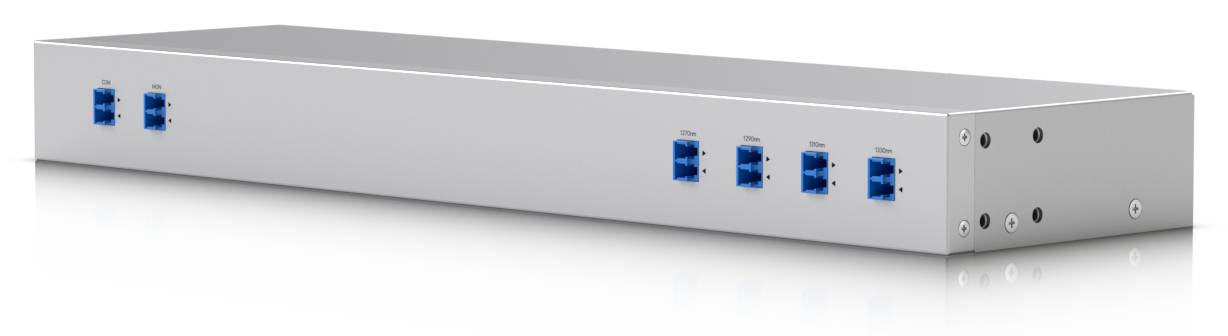
The Ubiquiti CWDM Mux Demux 4 (UACC-CWDM-4) is a passive, rack-mountable optical panel that combines or separates four wavelength channels over existing single-mode fibre infrastructure. It is one four-channel unit, not an Ethernet switch or a pair of muxes. A matching remote mux, compatible CWDM optical modules, host equipment and duplex single-mode fibre link are required and purchased separately.
Best For: For fibre network installations that need to combine or separate these four CWDM wavelengths over an existing single-mode fibre link. It suits deployments with compatible wavelength-specific optics and a matching remote mux/demux; it is not a standalone Ethernet switch.
Before you order: This is one four-channel UACC-CWDM-4. A working link requires a second matching mux/demux, wavelength-compatible CWDM modules and host equipment, plus duplex single-mode fibre cables and patching; these are separate. The COM link uses two fibres, not a simplex BiDi connection. No bit rate, reach, aggregate bandwidth or amplification is specified; results depend on the compatible optics, fibre and full optical budget. A rack is not included.
What's in the Box
- One Ubiquiti UACC-CWDM-4 four-channel chassis
- Two rack-mounting ears
- Eight ear screws
- Four rack cage nuts
- Four rack screws
What It Means in Practice
- The four channel ports are centred on 1270, 1290, 1310 and 1330 nm; the panel combines or separates those channels rather than switching Ethernet traffic.
- The duplex LC/UPC COM port links to another CWDM Mux Demux 4 over a pair of single-mode fibre cables. A matching remote unit and compatible optics are needed at both ends.
- The duplex LC/UPC MON port is for observation with a separate power meter or optical spectrum analyser; neither instrument is included.
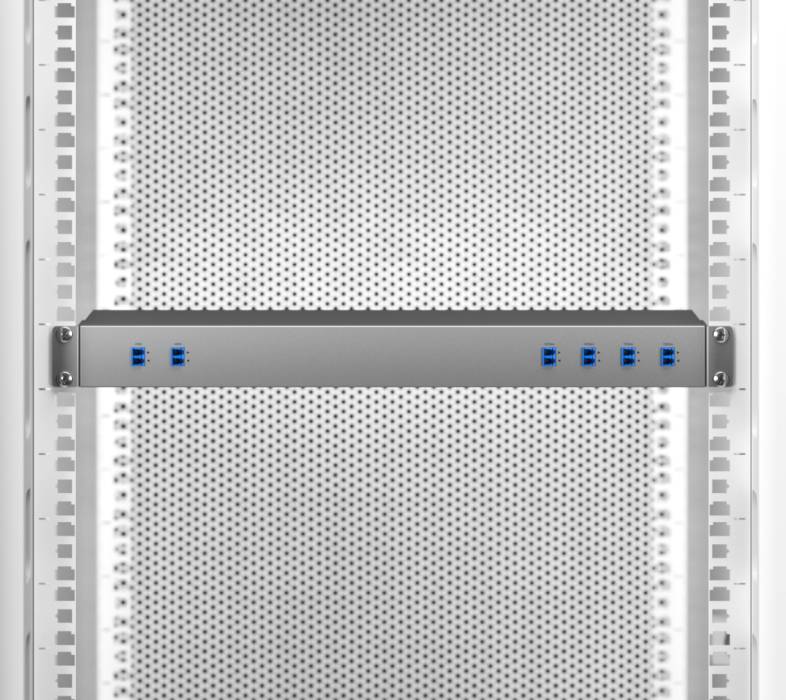
- The chassis measures 442 × 120 × 43.7 mm and is designed for rack mounting with the included ears. The rack and optical link components are separate.
What Will Not Work
- One four-channel unit is supplied; a matching remote mux/demux is required for the described link and is separate.
- CWDM optical modules, host equipment, duplex single-mode fibre cables and patching are required for deployment and are separate.
- COM uses a duplex link over two single-mode fibres; simplex BiDi operation is not established.
- No rated bit rate, reach, guaranteed aggregate bandwidth, or optical amplification/regeneration is specified.
- A rack, power meter and optical spectrum analyser are not included. The passive mux/demux is not an Ethernet switch and no external power supply is shown or required by the manufacturer’s installation sequence.
Key Features
Four CWDM channels
Combines or separates the 1270, 1290, 1310 and 1330 nm channels over single-mode fibre.
Duplex COM and MON
LC/UPC communication and monitoring ports support the described link and separate optical measurement.
Rack-mountable steel chassis
442 × 120 × 43.7 mm SGCC steel enclosure; rack ears are included, while the rack is separate.
Technical Specifications
Frequently Asked Questions
Singular Expert Insight
The four wavelength ports, duplex COM connection and separate duplex MON port bring multiplexing and optical monitoring connections together in one rack-mountable passive unit. It can extend the capacity of existing fibre infrastructure when the complete optical link is designed with compatible components.
Buyer’s Guide
✓ Buy it if For fibre network installations that need to combine or separate these four CWDM wavelengths over an existing single-mode fibre link. It suits deployments with compatible wavelength-specific optics and a matching remote mux/demux; it is not a standalone Ethernet switch.
✕ Skip it if This is one four-channel UACC-CWDM-4. A working link requires a second matching mux/demux, wavelength-compatible CWDM modules and host equipment, plus duplex single-mode fibre cables and patching; these are separate. The COM link uses two fibres, not a simplex BiDi connection. No bit rate, reach, aggregate bandwidth or amplification is specified; results depend on the compatible optics, fibre and full optical budget. A rack is not included.
→ Also consider Match all four wavelength channels and include optical insertion loss in the complete link budget before selecting the separate modules and fiber link.
Features - Ubiquiti - UACC-CWDM-4
Colour
silver
More Details
Product Code
04:511635
Manufacturer
Ubiquiti