
SanDisk Extreme Portable SSD 8TB SDSSDE61-8T00-G25 USB-C 3.2 Gen 2 1050 MB/s Read IP65 Rugged Black
Μάρκα:
Sandisk

SanDisk Extreme Portable SSD 8TB SDSSDE61-8T00-G25 USB-C 3.2 Gen 2 1050 MB/s Read IP65 Rugged Black
€1483.23 inc. VAT


SDSSDE61-8T00-G25
Delivery
Order Today...
Ships...
Delivery...
ℹ️ Large or fragile items (e.g. monitors) may require extra handling time. We'll keep you informed.
Payment options
Trusted Tech Choice
Buying Benefits
Verified
Competitive EU pricing
Delivered to Cyprus from EU stock
Local warranty support
Συνδεθείτε για να μπορέσουμε να σας ειδοποιήσουμε σχετικά με μια απάντηση
SanDisk Extreme Portable SSD 8TB — 1,050 MB/s, IP65, Eight Terabytes in a Pocket
8TB capacityUp to 1,050 MB/s readIP65, 3 m drop256-bit AES hardware
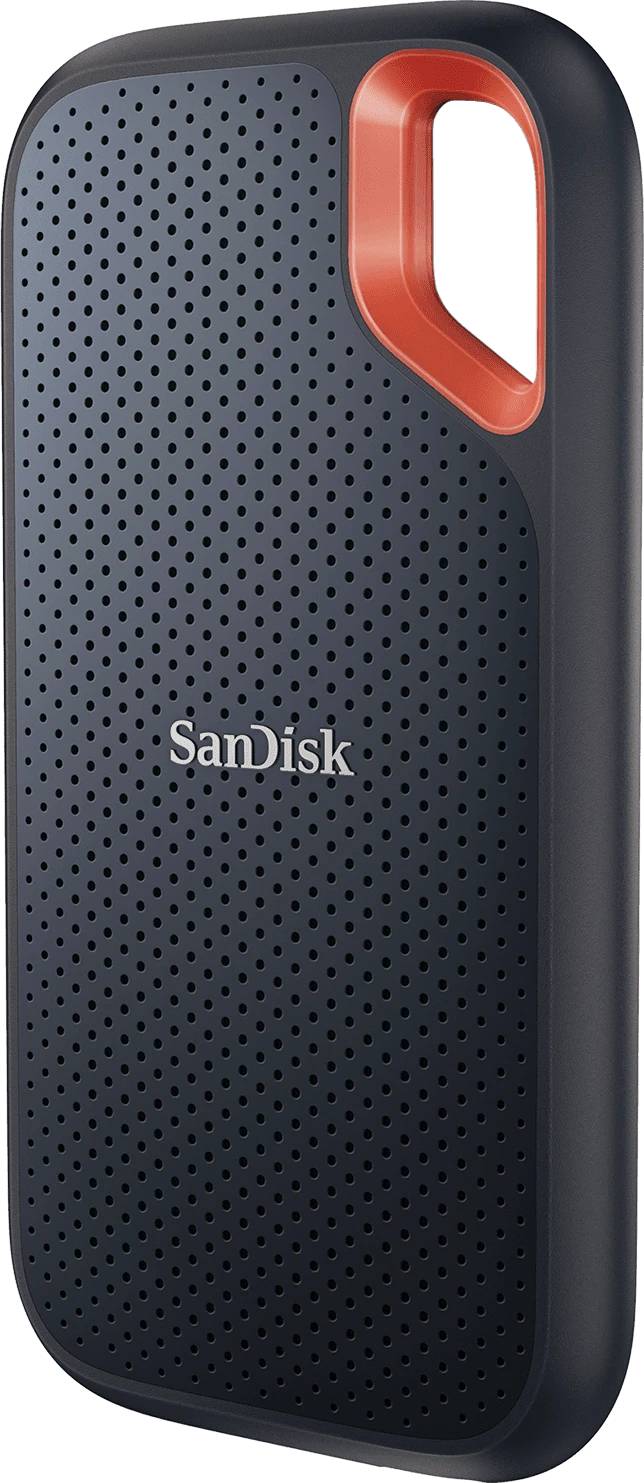
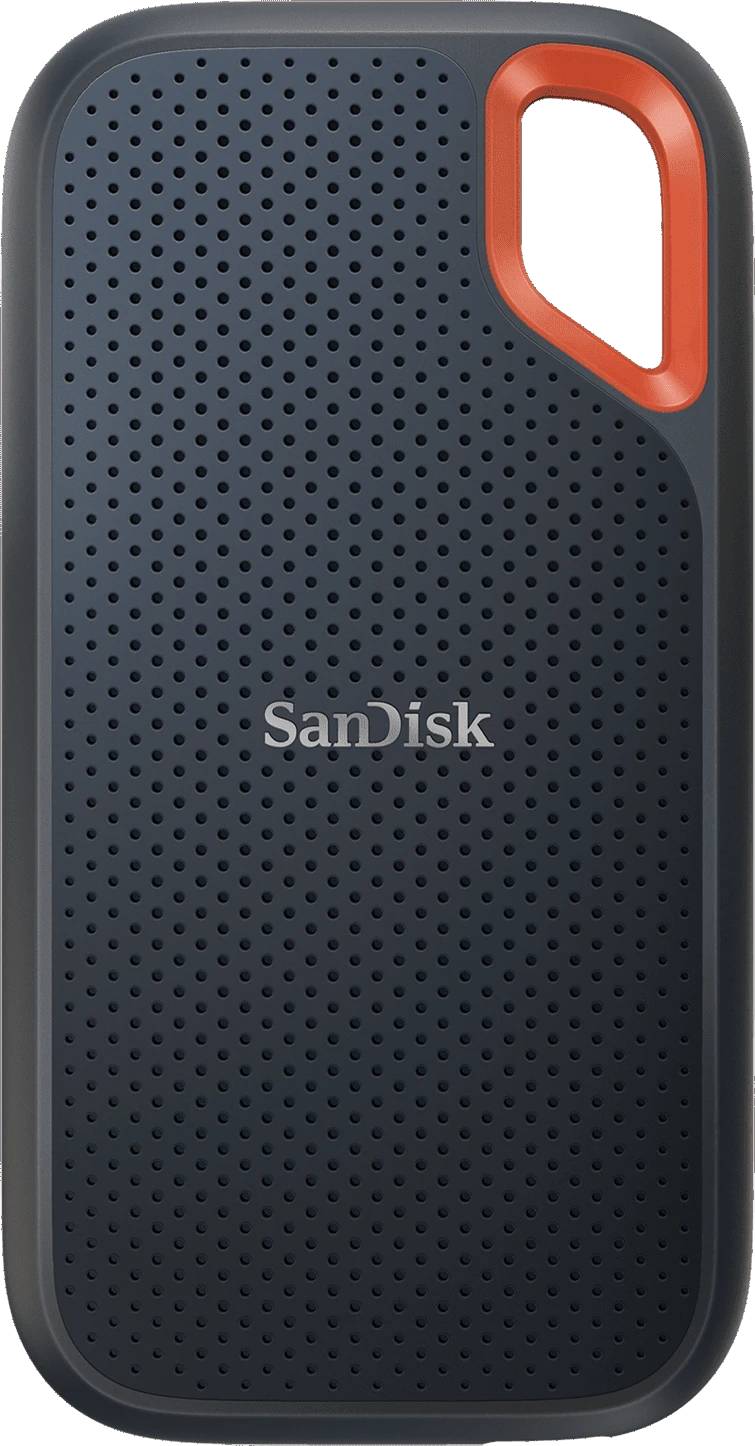
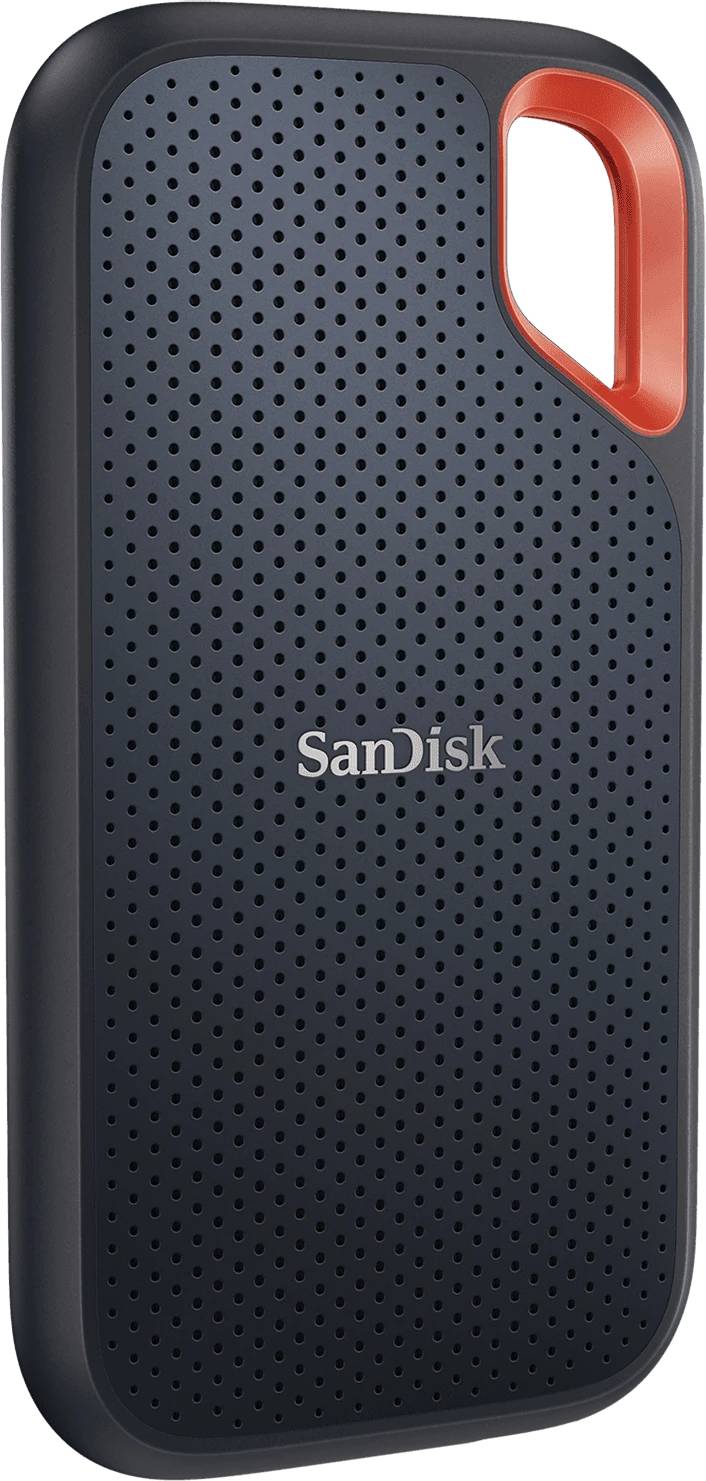
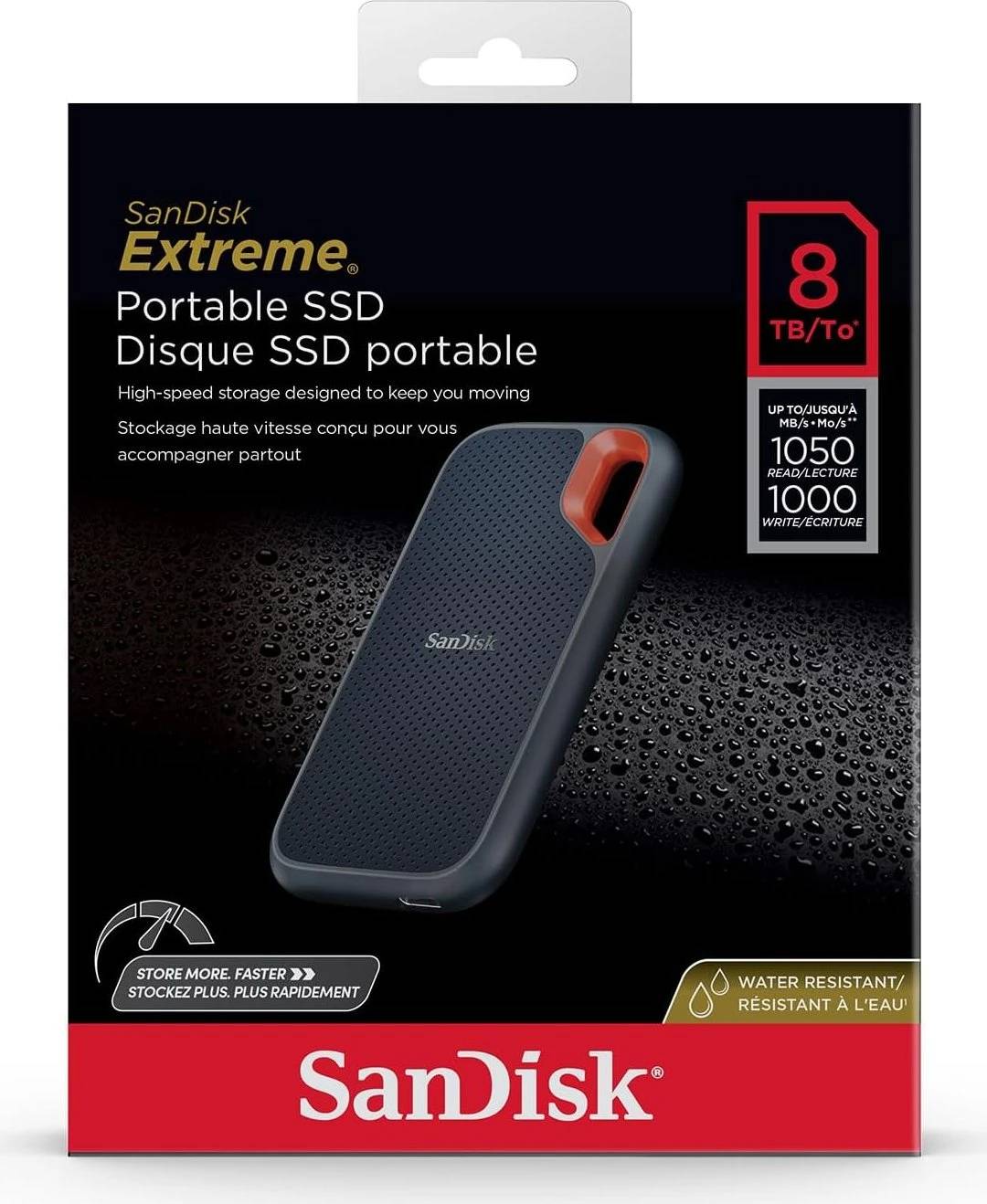
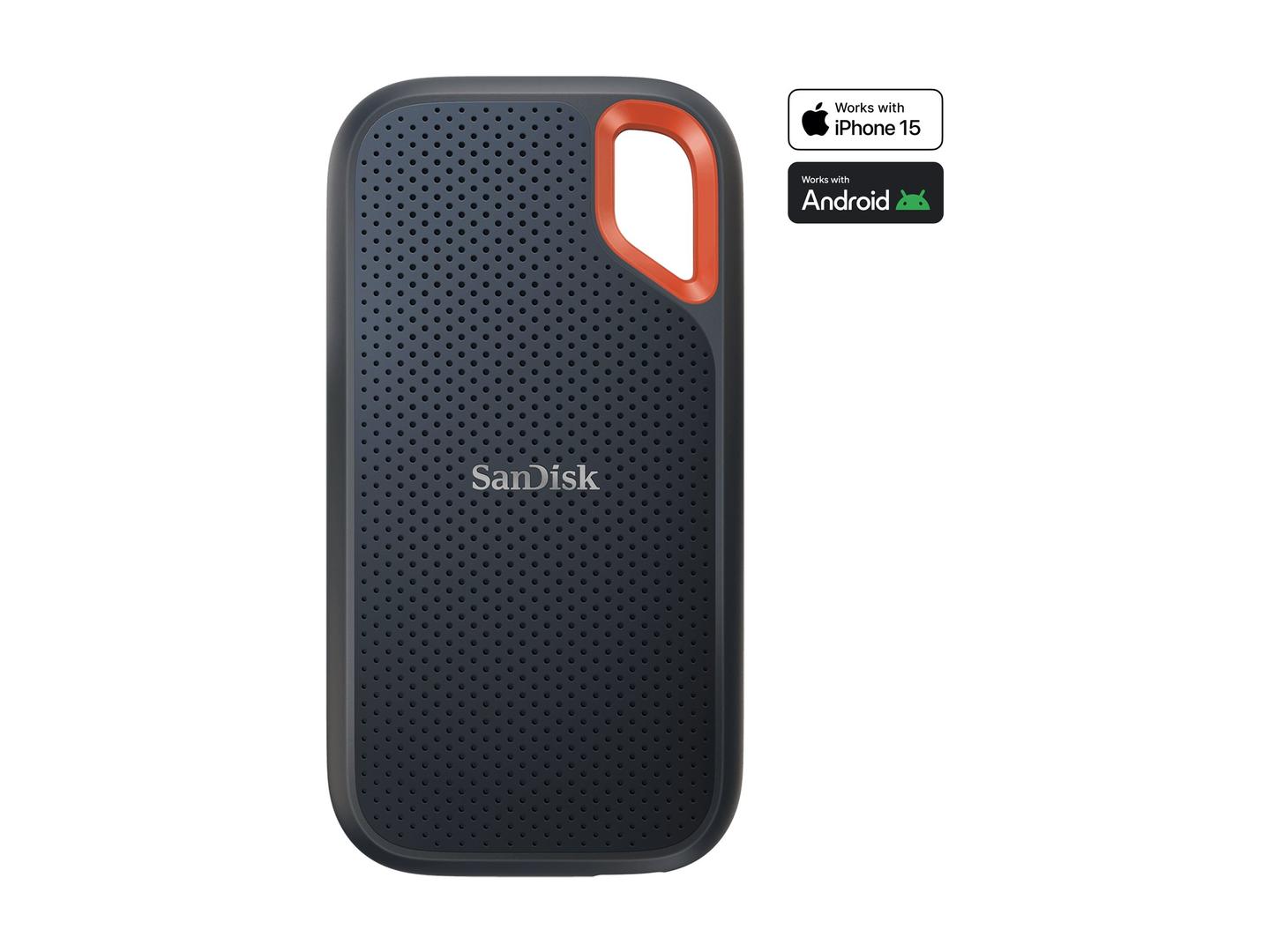
This is the largest drive in SanDisk’s rugged portable range: 8TB in a body that still clips to a bag, running over USB 3.2 Gen 2 at up to 1,050 MB/s read and up to 1,000 MB/s write. Part number SDSSDE61-8T00-G25 is the 8TB model. Everything that makes the Extreme line what it is comes with it — IP65 against dust and water jets, a three-metre drop rating, hardware AES-256 encryption and a carabiner loop moulded into the corner — but at eight terabytes it stops being a drive you carry a project on and becomes one you carry an archive on.
Compatibility — check before buying:
Three things worth knowing before you order. First, the speed figures: SanDisk publishes 1,050 MB/s read and 1,000 MB/s write for the line as a whole rather than for the 8TB capacity specifically — its Extreme USB 3.2 datasheet does not yet carry an 8TB row at all, and the 8TB body is very slightly thicker than the one that datasheet describes. We publish the line figures and say so. Second, the box: it contains a USB-C to USB-C cable and a USB-C to USB-A adapter, not a second cable. That adapter only reaches 10 Gbps if the USB-A port it goes into is itself USB 3.2 Gen 2 — on an older USB-A port the drive will be considerably slower. Third, and this is the honest one for an 8TB drive: a single drive is not a backup strategy. Eight terabytes in one enclosure is a lot to lose at once, and the encryption protects the data from a thief, not from a failure. If this is going to hold your only copy of anything, tell us and we will talk about the second copy.
Best For
✓ Whole archives carried between locations
✓ Video work where a project fills terabytes
✓ Photographers consolidating years of shoots
✓ Location work in rain, dust or rough handling
✓ Anyone who wants capacity without a desktop drive
✓ Carrying sensitive material that needs a password
Key Features
8TB in a pocket drive
100.8 × 52.55 × 9.6 mm. For most of the last decade eight terabytes meant a mains-powered desktop enclosure with a spinning disk in it; this does it silently, with no moving parts, from a single USB-C cable.
IP65 and a three-metre drop rating
Dust-tight and resistant to water jets — rain, spray, a hose down — plus a three-metre drop rating. That is the difference between the Extreme line and an ordinary portable SSD, and it is why this one clips to the outside of a bag rather than living inside it.
256-bit AES hardware encryption
Password protection performed by the drive itself, so the contents cannot be read by whoever finds it and no software has to be installed on the machine that opens it. On a drive holding eight terabytes of someone’s work, that is not a luxury.
Silicone shell and a carabiner loop
A rubberised shell that takes the impact, and a loop moulded into the corner so the drive hangs off a bag or a belt rather than rolling around in a pocket.
Technical Specifications
Frequently Asked Questions
Singular Expert Insight
Eight terabytes is the point at which the question changes from “which portable drive” to “what is this drive for”. As a working or travelling archive it is excellent, and the IP65 and three-metre ratings are what justify carrying it rather than a cheaper drive. As the only copy of a large library it is a risk no specification can remove, and the sensible pairing is a desktop drive at home — our external hard drives cost a fraction per terabyte for exactly that job. Within the Extreme family the split is simple: this is the 10 Gbps drive, the Extreme PRO is the 20 Gbps one that only a rare port can feed, and both carry the same IP65 rating and hardware encryption. If your machines are Macs, note that none of them reach the PRO’s 20 Gbps mode at all, which makes this the more honest purchase there. Our full range is in external SSDs.
Buyer’s Guide
Buy it if
You need serious capacity that travels and survives — 8TB, IP65, a three-metre drop rating and hardware AES-256, at speeds any modern USB-C port can actually deliver.
Skip it if
This would be the only copy of work you cannot lose — one drive is not a backup, whatever its rating. Skip it too if you need 2,000 MB/s and have a 20 Gbps port, where the Extreme PRO is the drive.
Also consider
An Extreme PRO Portable SSD if your machine has a 20 Gbps port. A desktop external hard drive as the second copy, at a fraction of the price per terabyte. A smaller Extreme if 8TB is more than the job needs.
Form Factor
- External
Colour
black
Interface
- USB3.2,
- USB Type-C
Technical specifications
Μέγεθος
8TB
Χαρακτηριστικά
Product Code
04:573043
EAN Code
0619659208998
Manufacturer
Sandisk