
SanDisk Optimus 5100 500GB Internal NVMe SSD M.2 2280 PCIe 4.0 x4 6600MB/s Read 5600MB/s Write 300 TBW
Brand:
Sandisk

SanDisk Optimus 5100 500GB Internal NVMe SSD M.2 2280 PCIe 4.0 x4 6600MB/s Read 5600MB/s Write 300 TBW
€124.71 inc. VAT


SDSP51500GAN-000E0
Delivery
Order Today...
Ships...
Delivery...
ℹ️ Large or fragile items (e.g. monitors) may require extra handling time. We'll keep you informed.
Payment options
Trusted Tech Choice
Buying Benefits
Verified
Competitive EU pricing
Delivered to Cyprus from EU stock
Local warranty support
Please sign in so that we can notify you about a reply
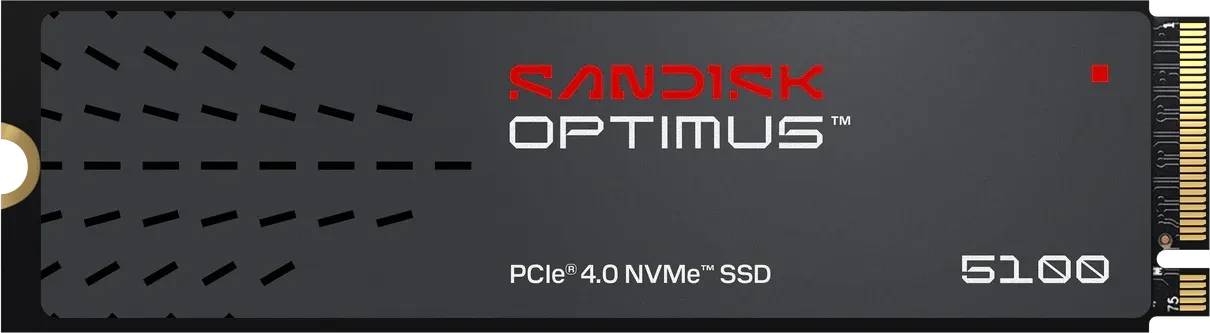
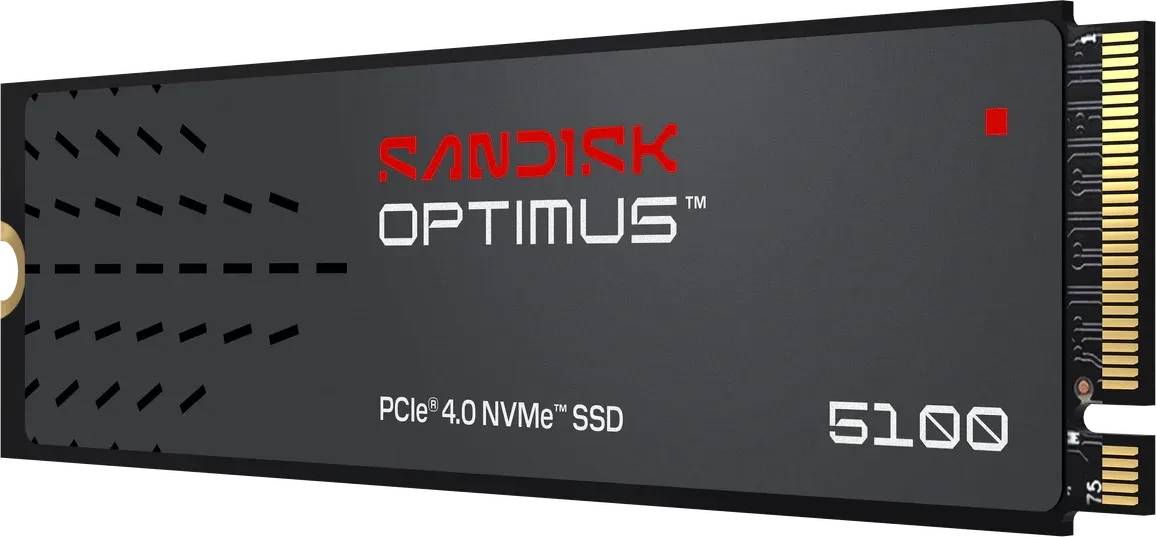
SanDisk Optimus 5100 500GB — PCIe 4.0 NVMe in a single-sided M.2 2280
6600 MB/s read5600 MB/s write300 TBWSingle-sided M.2 2280
The SanDisk Optimus 5100 is an internal NVMe SSD — SanDisk’s own term — in the M.2 2280 form factor, connecting over PCIe 4.0 x4. This 500GB model is rated at up to 6600 MB/s sequential read and 5600 MB/s sequential write, with 660K random read and 1.1M random write IOPS and 300 TBW of endurance. The board is single-sided, which matters more than it sounds: single-sided drives fit the thin M.2 slots in laptops and small-form-factor machines where a double-sided drive fouls the cover. It is a mainstream drive, sold bare, for a machine that has an M.2 slot free.
Compatibility — check before buying:
This is a bare internal drive: no enclosure, no cables, no screws, no adapter. It needs a free M.2 2280 slot and, to reach the speeds above, a PCIe 4.0 x4 connection — in a PCIe 3.0 slot it will work but negotiate down, and the figures on this page will not be met. Check your motherboard or laptop manual for which of its M.2 slots is the PCIe 4.0 one; on many boards only the first slot is. On security: SanDisk publishes TCG Pyrite 2.01 and ATA Security passthrough for this line — that is not the AES-256 hardware self-encryption sold on some other SanDisk families, so if you need a self-encrypting drive for a compliance requirement, tell us and we will point you at one. One point specific to this capacity: 500 GB is the slowest and least durable drive in the family — 6,600 MB/s read and 5,600 MB/s write against 7,100 / 6,700 on the 1 TB and 2 TB, and 300 TBW against 600. That is normal for the smallest drive in an NVMe range, but it means the 1 TB is faster as well as larger.
Best For
✓ Adding or replacing storage in a desktop with a free M.2 slot
✓ Laptops and small machines that need a single-sided drive
✓ Boot drives on PCIe 4.0 boards
✓ Game libraries and large project files
✓ Replacing a slower SATA SSD
✓ Builds where the drive is chosen on endurance as much as speed
Key Features
PCIe 4.0 x4 NVMe, 6600 MB/s read
Sequential figures of up to 6600 MB/s read and 5600 MB/s write for this capacity, with 660K random read IOPS. SanDisk measures these as burst figures at queue depth 8 with a single thread — real-world sustained writes on any drive fall below a burst rating once the cache is full.
Single-sided M.2 2280
All the components sit on one face of the board. That is what lets it fit the shallow M.2 slots used in laptops, mini PCs and some motherboards’ rear-mounted positions, where a double-sided drive physically will not close.
300 TBW of endurance
The endurance rating scales with capacity across this family, and this 500GB model is rated at 300 terabytes written. For a normal desktop workload that is far more than most drives ever see; it matters if you are writing large volumes daily.
Dashboard software and a five-year term
SanDisk Dashboard for Windows monitors drive health and handles firmware updates, and an Acronis True Image licence is included for cloning an existing drive across. SanDisk publishes a five-year warranty on this line.
Technical Specifications
Frequently Asked Questions
Singular Expert Insight
Two things are worth knowing about this family before you choose a capacity. First, the 500 GB is the slowest in the range — 6,600 MB/s read and 5,600 MB/s write, against 7,100 / 6,700 on the 1 TB. That is inherent to the smallest capacity in an NVMe family rather than a fault, but it does mean the step up to 1 TB buys speed and endurance as well as space. Second, endurance scales with capacity — 300 TBW here — so if you write large volumes daily, the bigger drive buys life as well as space. The drive itself is straightforward: single-sided M.2 2280, PCIe 4.0 x4, sold bare. Make sure the slot you are putting it in is the PCIe 4.0 one, because on many boards only the first M.2 socket is, and that single detail decides whether you get the speeds on this page. More drives are in our internal SSDs section, and if you actually want a portable drive rather than an internal one, external SSDs is the place to look. Tell us the machine and we will confirm the slot before you order.
Buyer’s Guide
Buy it if
You have a free M.2 2280 slot on a PCIe 4.0 connection and want 500GB of fast NVMe storage with 300 TBW of endurance and a five-year manufacturer term. Single-sided construction means it fits thin laptops as well as desktops.
Skip it if
Your machine is PCIe 3.0 only — the drive works but you will not see these speeds. Skip it too if you need a self-encrypting drive with hardware AES, or if you wanted a portable drive, because this is a bare internal card with nothing in the box.
Also consider
The 1 TB model — faster on both read and write, double the endurance, and often only a modest step up in price. Choose 500 GB when it is a dedicated boot drive alongside existing storage.
Features - Sandisk - SDSP51500GAN-000E0
Interface
- M.2
More Details
Product Code
03:281313
EAN Code
0619659232306
Manufacturer
Sandisk
Technical specifications
Capacity
500GB