
Silicon Power US75 SP01KGBP44US7505 1TB M.2 2280 PCIe Gen4 x4 NVMe Internal SSD 7400/6000 MB/s
Μάρκα:
Silicon Power

Silicon Power US75 SP01KGBP44US7505 1TB M.2 2280 PCIe Gen4 x4 NVMe Internal SSD 7400/6000 MB/s
€228.22 inc. VAT


SP01KGBP44US7505
Delivery
Order Today...
Ships...
Delivery...
ℹ️ Large or fragile items (e.g. monitors) may require extra handling time. We'll keep you informed.
Payment options
Trusted Tech Choice
Buying Benefits
Verified
Competitive EU pricing
Delivered to Cyprus from EU stock
Local warranty support
Συνδεθείτε για να μπορέσουμε να σας ειδοποιήσουμε σχετικά με μια απάντηση
Silicon Power US75 1TB M.2 2280 — PCIe Gen4 x4 NVMe SSD, 7,400 MB/s Read
7,400 / 6,000 MB/sPCIe Gen4 x4 NVMe300 TBW · 5-year termM.2 2280, 3.6 mm bare
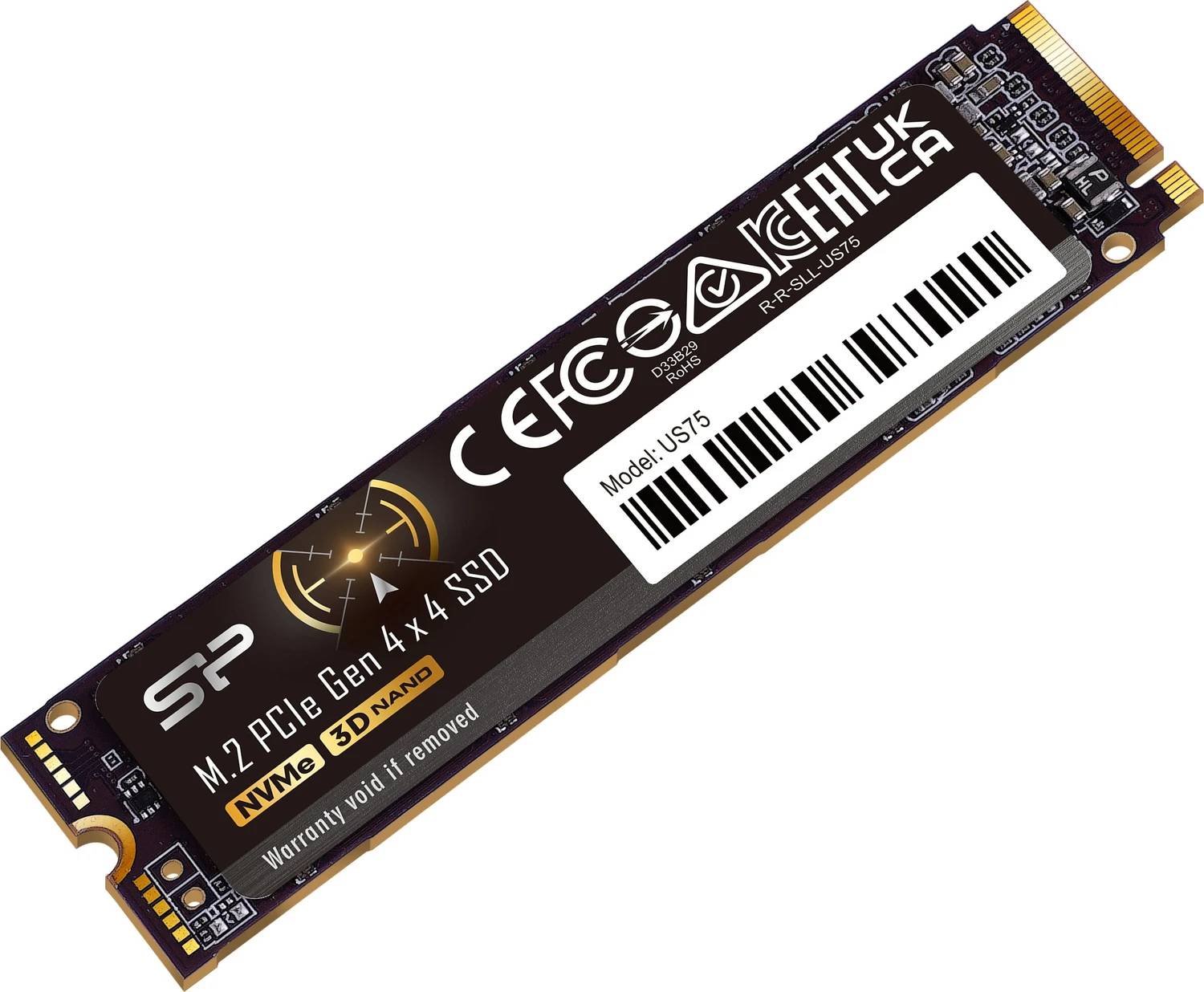
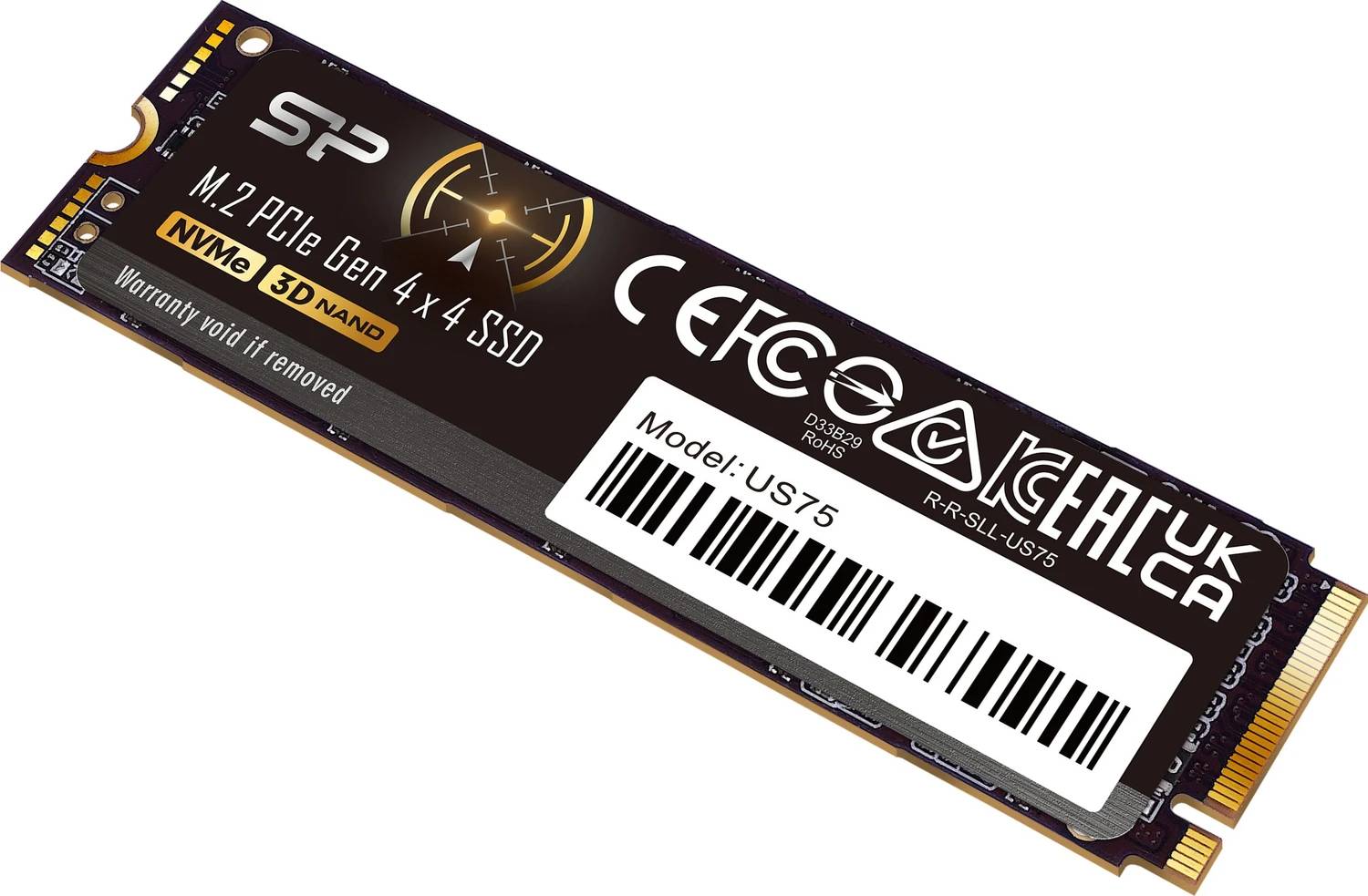
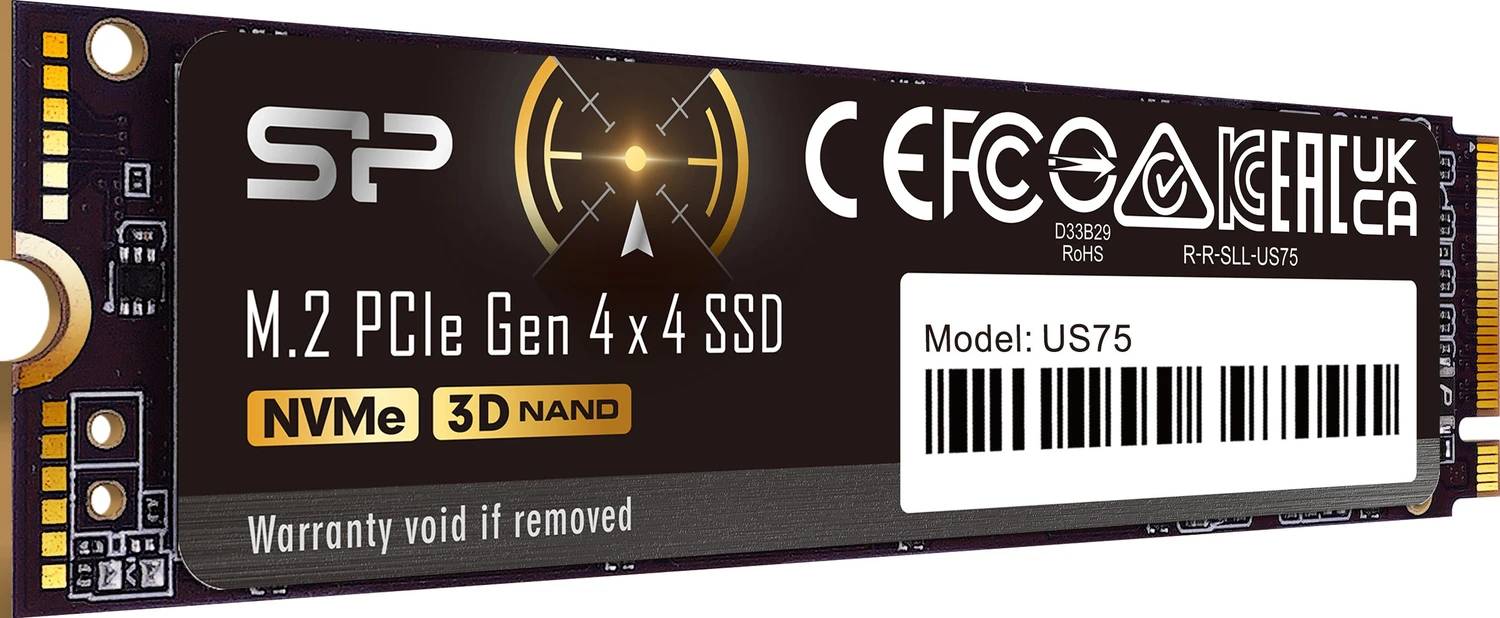
The Silicon Power US75 SP01KGBP44US7505 is a 1TB M.2 2280 NVMe solid state drive on PCIe Gen4 x4, rated at up to 7,400 MB/s read and 6,000 MB/s write at this capacity. Those figures put it at the top of what PCIe Gen4 delivers and roughly fifty per cent ahead of Silicon Power’s own UD90 on reads — this is the fast drive in the range, not the value one. It is 3.6 mm thick with no heatsink fitted, which is what lets it go into thin laptops as well as desktops, and it carries a 300 TBW endurance rating with a 5-year manufacturer term.
Compatibility — check before buying:
The slot has to carry PCIe: this is an NVMe drive and it will not work in an M.2 slot wired for SATA only. It also wants Gen4 to show what it can do — in a PCIe Gen3 slot it works perfectly but is limited by the bus to roughly 3,500 MB/s, which is a property of Gen3 rather than a Silicon Power figure, and at that point a cheaper drive would give you the same result. No heatsink is included. Silicon Power sells a separate US75 with Heatsink model, 5 mm thick instead of 3.6, and that is the one it describes as PlayStation 5 compatible — not this one. If a PS5 is where the drive is going, order the heatsink version; if it is a thin laptop, the 3.6 mm bare drive is the one that fits. Silicon Power publishes no package contents, so plan on the bare drive with no screw and no thermal pad. Tell us the motherboard, laptop or console and we will confirm the slot generation and the clearance before you order.
Best For
✓ Gaming desktops and laptops with a Gen4 M.2 slot
✓ Video editing and large file work where write speed shows
✓ A fast primary drive for a new build
✓ Thin laptops where a 5 mm heatsink drive will not close
✓ Replacing a slower Gen3 or SATA drive on a Gen4 board
✓ Anyone who wants the top of the Gen4 range rather than the value tier
Key Features
7,400 MB/s read on Gen4 x4
This is close to the practical ceiling of PCIe Gen4 x4. Against Silicon Power’s own UD90 2280 at 5,000 MB/s it is about fifty per cent faster to read, and against a SATA SSD at 550 MB/s it is more than thirteen times.
6,000 MB/s write at 1TB
Write speed is where the capacity ladder matters here: the 500GB is rated 4,400 MB/s and the 2TB and 4TB reach 6,500. The 1TB at 6,000 is the point where the drive stops being held back on sustained writes.
300 TBW with a 5-year term
Endurance is rated at 300 terabytes written for the 1TB. Silicon Power’s cover runs for 5 years or until that figure is passed, whichever comes first, and the same TBW ladder applies whether or not the drive has a heatsink.
3.6 mm, bare, and 8 grams
No heatsink means it clears the underside of a laptop panel and slides under a motherboard’s own M.2 shield. Rated to 1500G / 0.5 ms shock with an estimated MTBF of 1,500,000 hours, and Silicon Power’s SP ToolBox is a free download for monitoring health.
Technical Specifications
Frequently Asked Questions
Singular Expert Insight
The US75 is Silicon Power’s fast Gen4 drive, and the honest way to place it is against its own family rather than against the market. The UD90 2280 at the same 1TB reads 5,000 MB/s; this reads 7,400. The UD85 is a Gen4 drive that performs at Gen3 speeds, around 3,600 MB/s, and the UD80 is genuinely Gen3 — names that look like one ladder but are not, and the reason to buy by part number rather than by family. The two things worth deciding before you order are the slot generation and the heatsink. On a Gen3 board the bus takes away most of what you are paying for. And the heatsink question is not cosmetic: Silicon Power sells a separate 5 mm US75 with Heatsink and reserves its PlayStation 5 statement for that model, so a bare drive is the right choice for a thin laptop and the wrong one for a console. Within the US75 line itself, the 1TB is where write speed arrives — the 500GB is held to 4,400 MB/s — while the 2TB adds a further 500 MB/s of write and double the endurance.
Buyer’s Guide
Buy it if
Your motherboard or laptop has a Gen4 M.2 slot and you want the performance it can deliver. You game, edit video or move large files where 6,000 MB/s of write is felt. You need a bare 3.6 mm drive that fits under a laptop panel or a motherboard shield. You want 300 TBW and a 5-year manufacturer term.
Skip it if
You are upgrading a PlayStation 5 — order the US75 with Heatsink model, which is the one Silicon Power states is PS5 compatible. Your board is PCIe Gen3, where the bus caps you at roughly half this drive’s rating. Your M.2 slot is SATA-only, which this drive cannot use. You want a bundled heatsink supplied in the box.
Also consider
The 2TB US75 if you need more space and the extra 500 MB/s of write. The US75 with Heatsink if the destination is a PlayStation 5. The Silicon Power UD90 if you would rather save money and 5,000 MB/s is plenty. A separate M.2 heatsink if your motherboard does not provide one.
Interface
- M.2
Technical specifications
Μέγεθος
1TB
Χαρακτηριστικά
Product Code
04:547411
EAN Code
4713436153801
Manufacturer
Silicon Power