
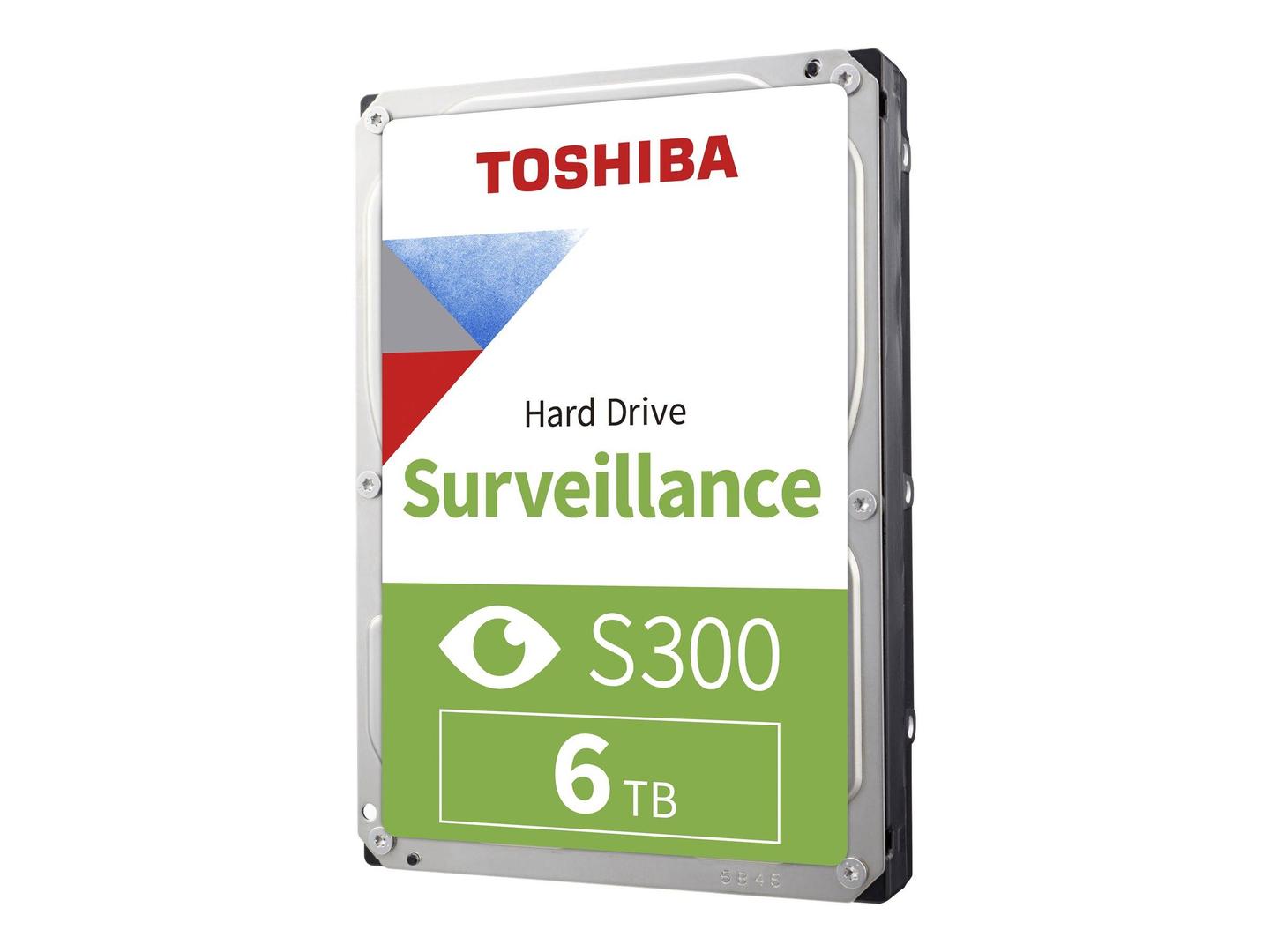
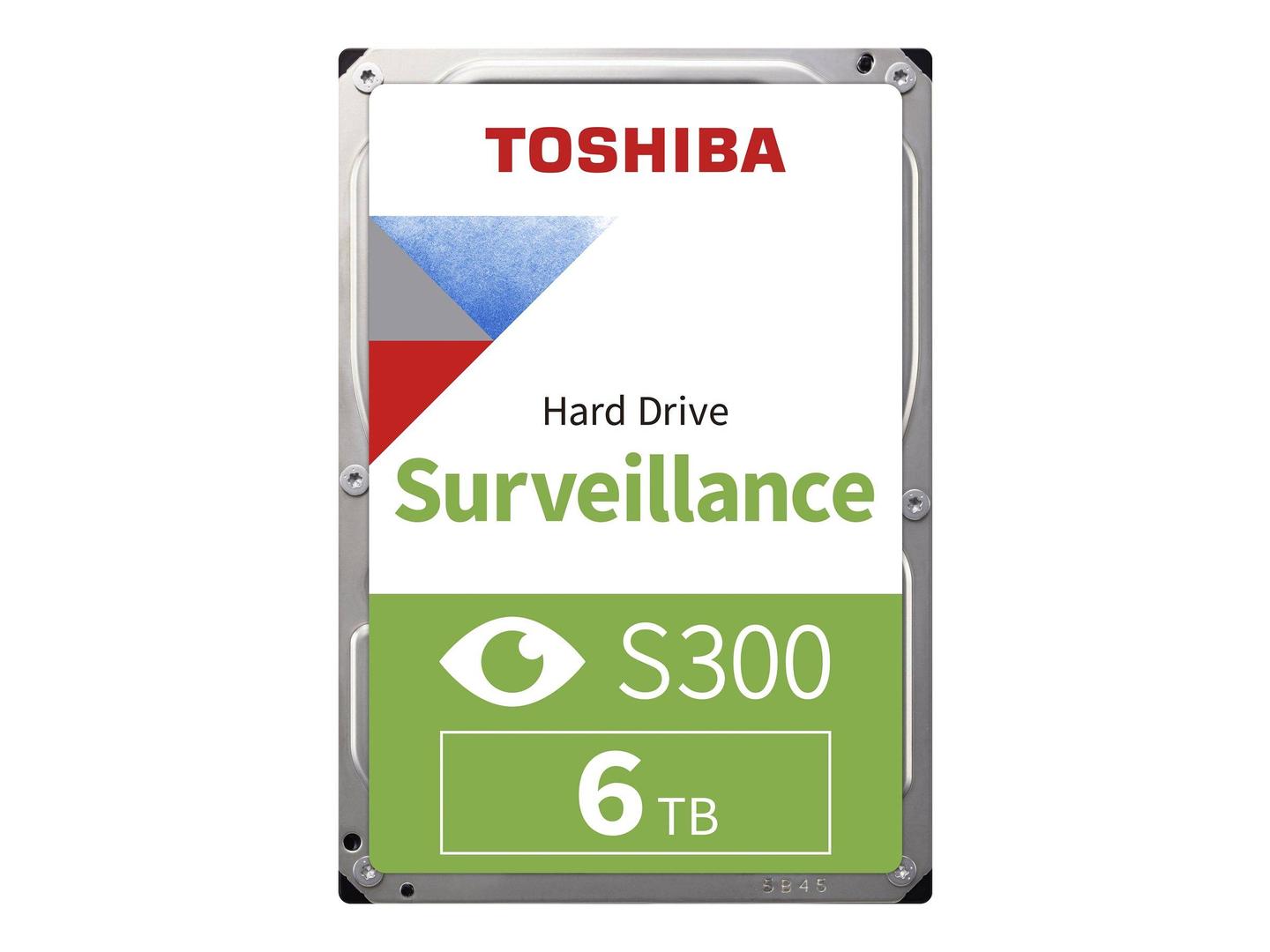
Toshiba S300 6TB Surveillance Hard Drive, 3.5" SATA 6Gb/s, 5400rpm, 256MB, 24/7, SMR (HDWT860UZSVA)
Μάρκα:
Toshiba

Toshiba S300 6TB Surveillance Hard Drive, 3.5" SATA 6Gb/s, 5400rpm, 256MB, 24/7, SMR (HDWT860UZSVA)
€355.48 inc. VAT


HDWT860UZSVA
Delivery
Order Today...
Ships...
Delivery...
ℹ️ Large or fragile items (e.g. monitors) may require extra handling time. We'll keep you informed.
Payment options
Trusted Tech Choice
Buying Benefits
Verified
Competitive EU pricing
Delivered to Cyprus from EU stock
Local warranty support
Συνδεθείτε για να μπορέσουμε να σας ειδοποιήσουμε σχετικά με μια απάντηση
Toshiba S300 6TB — built for cameras, and only for cameras
24/7 rated180 TB/year workload5,400 rpm · 256 MB???? SMR — read below
The HDWT860UZSVA is a Toshiba S300 Surveillance hard drive at 6TB — a 3.5″ SATA 6 Gb/s drive spinning at 5,400 rpm with a 256 MB buffer, rated for 24 hours a day, seven days a week and a 180 TB/year workload. It is designed specifically for DVR and NVR recording. ???? It uses SMR recording — please read the note below before buying, because it makes this drive unsuitable for NAS and RAID use.
Compatibility — check before buying:
???? The most important thing on this page: this is a Drive-Managed SMR drive. Buy it for a DVR or NVR, and for nothing else.
Toshiba states it plainly in the DT02-V product manual: “Drive-Managed SMR (Shingled magnetic recording) Technology.”
What SMR means in practice. Shingled recording overlaps the data tracks like roof tiles, which buys extra capacity per platter. The cost is that rewriting data in place requires the drive to read and rewrite neighbouring tracks. And because this is drive-managed SMR, the host computer cannot see the shingling or plan around it — the drive decides, on its own, when to reorganise.
???? Do not use this drive in a NAS, and do not use it in any parity RAID array. Under a RAID rebuild or a ZFS resilver, a drive-managed SMR disk can slow to a crawl and, in some controllers, drop out of the array entirely. This is a well-established failure mode and it is why we are flagging it this prominently. If you want a drive for a NAS, buy an N300 — it is CMR and has rotational vibration sensors.
⭐ Where SMR is genuinely fine: surveillance recording. A DVR or NVR writes long, sequential streams of video and rarely rewrites in place. That is the one access pattern drive-managed SMR handles well, which is exactly why Toshiba positions this drive here. For its intended job it is a sound, cost-effective choice.
⭐ It is properly rated for continuous operation. Toshiba publishes 24 hours a day, seven days a week and a 180 TB/year workload rating, with 1,000,000 hours MTTF and an annualised failure rate of 0.88 %. An ordinary desktop drive is not rated for either, which is the reason surveillance drives exist as a category.
⚠️ Up to 8 drives per enclosure. Toshiba publishes this limit. Beyond eight bays you want a drive rated for higher vibration environments.
⚠️ 5,400 rpm, and that is deliberate. Lower spindle speed means less heat, less noise and lower power in a recorder that runs permanently. It is not a performance drive and is not meant to be.
⚠️ Two figures where Toshiba’s own documents disagree, which we flag rather than resolve.
• Buffer: the current S300 datasheet says 256 MB; the older DT02-V product manual says 128 MiB. Listings quoting 128 MB are citing the obsolete document.
• Camera streams: the S300 datasheet says up to 64; the DT02-V manual says up to 32.
⚠️ Rotational vibration sensors: we do not claim them. Toshiba’s semiconductor comparison table lists an RV safeguard for this drive, but the DT02-V product manual documents only shock and vibration tolerance and never states a dedicated RV sensor. Toshiba markets RV sensors firmly on the S300 Pro and N300; their presence on this 5,400 rpm model is not cleanly established, so we do not publish an RV-sensor claim. Ask us if it matters to your installation.
Best For
✓ A DVR or NVR recording continuously from security cameras
✓ Systems of up to eight drives
✓ Replacing a desktop drive that was never rated for 24/7 recording
✓ Any installation where low heat, low noise and low power matter more than speed
Key Features
24/7 operation with a 180 TB/year workload rating
Toshiba rates it for continuous running — 1,000,000 hours MTTF and a 0.88 % annualised failure rate. A desktop drive carries neither rating and will not last in a recorder.
5,400 rpm with a 256 MB buffer
Lower spindle speed means less heat, less noise and lower power in a device that never switches off. 4.84 W operating and 2.81 W at idle, at 24 dB typical.
Sustained 184 MB/s
Comfortably more than enough for multiple simultaneous camera streams, which are sequential and modest in bandwidth.
Rated for up to 8 drives per enclosure
Toshiba publishes the limit. It also rates the drive for surveillance DVR, NVR and hybrid analogue/IP platforms.
???? SMR — correct for surveillance, wrong for NAS
Drive-Managed Shingled Magnetic Recording. Excellent for sequential video writing; not suitable for a NAS or any parity RAID array. See the compatibility notes.
Technical Specifications
Frequently Asked Questions
Singular Expert Insight
The honest way to sell this drive is to be clear about what it is for and what it is not. For a DVR or NVR it is exactly right: rated for 24/7 running and a 180 TB/year workload, quiet, cool and cheap per terabyte, with a sustained 184 MB/s that is far more than camera streams need. Surveillance recording is long sequential writing, and that is the one workload where SMR costs you nothing. But it is SMR, and drive-managed SMR at that — so do not put it in a NAS and do not put it in a parity RAID array. Under a rebuild or a resilver, drive-managed SMR disks can slow to the point of dropping out of the array, and no amount of capacity-per-pound makes that a good trade. If a NAS is what you are buying for, the N300 is the CMR drive in this range designed for it. Two smaller notes. Toshiba’s own documents disagree on the buffer size and the camera-stream count, and we publish both figures rather than the flattering one. And we do not claim rotational vibration sensors here, because Toshiba’s product manual does not state them even though one of its comparison tables does. Browse our internal storage range or ask us about NAS-rated drives.
Buyer’s Guide
Buy it if
It is going into a DVR or NVR that records continuously, in a system of up to eight drives, and you want a drive actually rated for that duty.
Skip it if
???? It is for a NAS or any parity RAID array — SMR is the wrong technology for those, and a rebuild can fail. Buy a CMR NAS drive such as the N300 instead.
Also consider
A second matched drive if your recorder mirrors, and an N300 instead if any part of the system is a NAS rather than a recorder.
Form Factor
- 3.5",
- Internal
Interface
- SATA
Technical specifications
Μέγεθος
6TB
Χαρακτηριστικά
Product Code
04:415173
EAN Code
4260557511879
Manufacturer
Toshiba